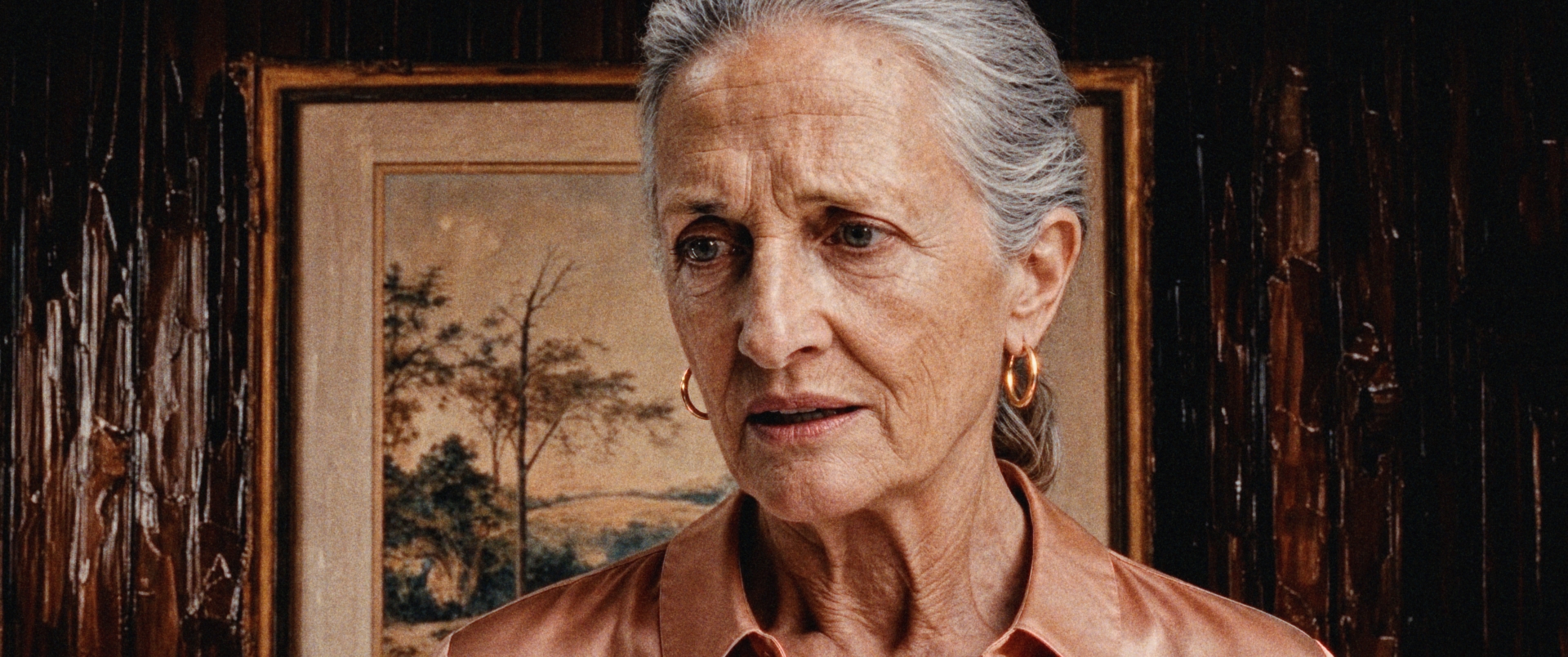
Cinema — the word carries heavy things. An industry, sound stages, constant relocations, crews settling in and moving on, gear to haul, logistics. A great commotion. Collective energy invested in the physical world, in the mode of community. Here, none of that.
Let me be precise: I am not saying this is not cinema. I am saying that making a film with AI is not making cinema — since you escape the chaos of shoots. It is closer to writing.
Closer to writing than to shooting
Working with AI feels closer to writing than to shooting. Producing and directing a feature film can then feel like writing a novella, a long short story — that hundred-page book a single human can accomplish in a few weeks or a few months. There is autonomy, lightness.
The real novelty is the liberation of this medium of expression. It remains a film — telling a story through images, sounds, movements is precisely what this is. But film, as a medium, becomes accessible to an individual, the way writing has always been. The intimate account, autobiography, the personal film to recount one's own family, to bring back the dead from old photographs — all of that becomes thinkable.
“Making films without having to make cinema.”
Time and money
The comparison has its limits. Telling the same story — varied sets, extras, visual effects — can see its costs divided by five, by ten, by a hundred, perhaps more for large spectacle films. But it is not free. There is compute time, hardware, energy. Even with open-source models, the metal has its price.
And there is time. A great deal of time. AI is stochastic: it never makes exactly the same thing twice. That is what you play with — but it requires going back, again and again.
The tool and the overhead
The tools change everything. You can make an AI film without any appetite for technique, using the available platforms. But then you spend your time juggling files, moving videos, images and sounds from one service to another. All this overhead work — necessary but unproductive — can devour most of the energy.
The software cinematographer
On a film set, the cinematographer sculpts light with physical equipment. Here, there is an equivalent: someone who knows the tech, who writes software to ease the making. On this film, I do not separate creation from software work — it is not the same emotion, the same energy, but it is the same time. While imagining the scene, you also build the tools that will make it possible. Just as thinking about how the camera moves is already part of mise en scène.
When you commit to that path — when you train yourself, when you grow strong in these computing domains — you can push the thing remarkably far. Automate, parallelise the computations, refine the ergonomics, gather the assets. Divide times and costs. Make the whole more economical, more performant. Sustain a feature film on the shoulders of a single person.
That is precisely what had to be built for this film.
So, is it cinema?
That it is a film, for sure: telling a story with moving images and sounds is the very definition. Cinema? The word points, by its etymology, to movement — so, a priori, yes, but it is too early to say. Too early, because it will take a thousand forms, and not everything will hinge on the object, but also on its distribution: the future of theaters, of festivals. Will these films even have a fixed form? Perhaps they will be living objects, like programs that receive endless updates.
All of this is very young — a birth. It is too early to know what it truly is.