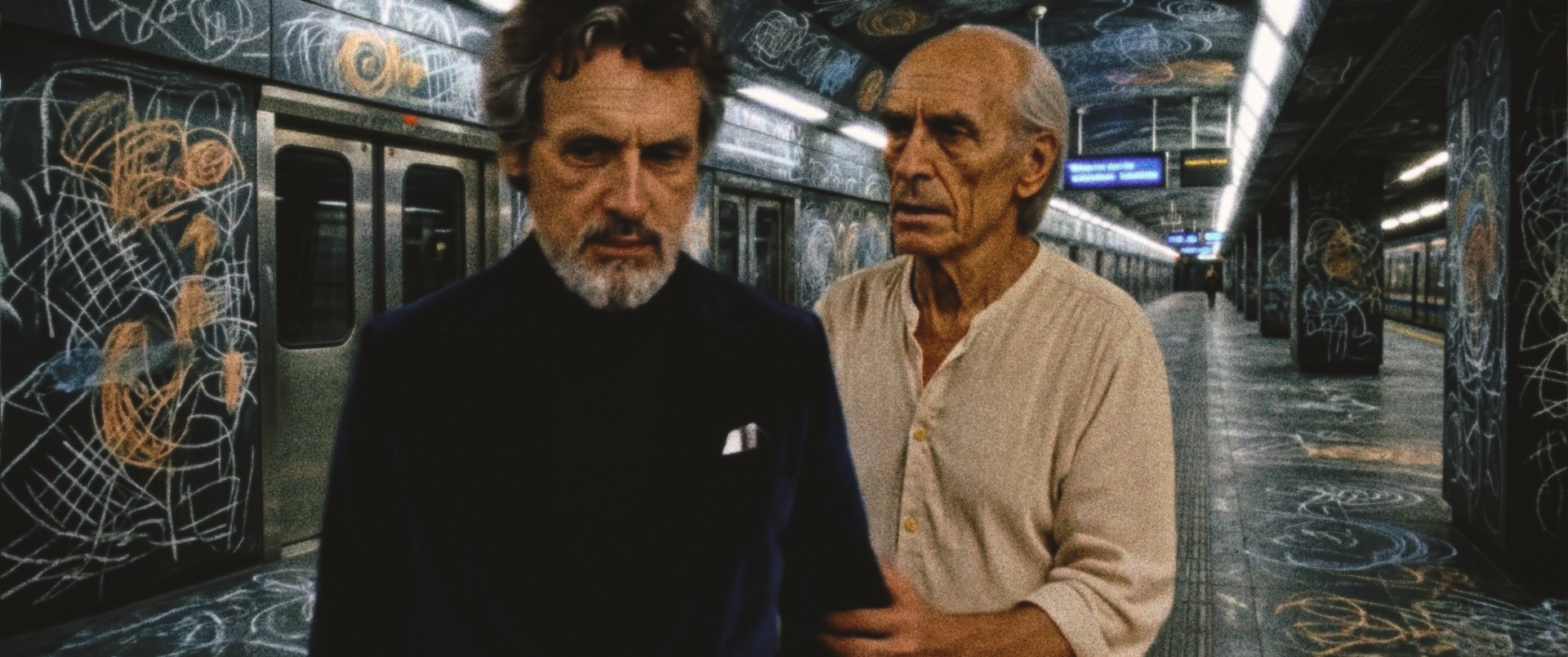
Today, the artificial intelligence models that generate images and voices are distributed across a few providers: Runway ML, ByteDance, Kling, Google, OpenAI, ElevenLabs and others. Each excels in a domain, none covers the whole. Without orchestration, you spend your day juggling and tidying files. Not prompting.
So I coded a tool: Squiddle. A homemade production platform that creates the rushes, talks to DaVinci Resolve, retrieves the content, and orchestrates post-production and visual effects.
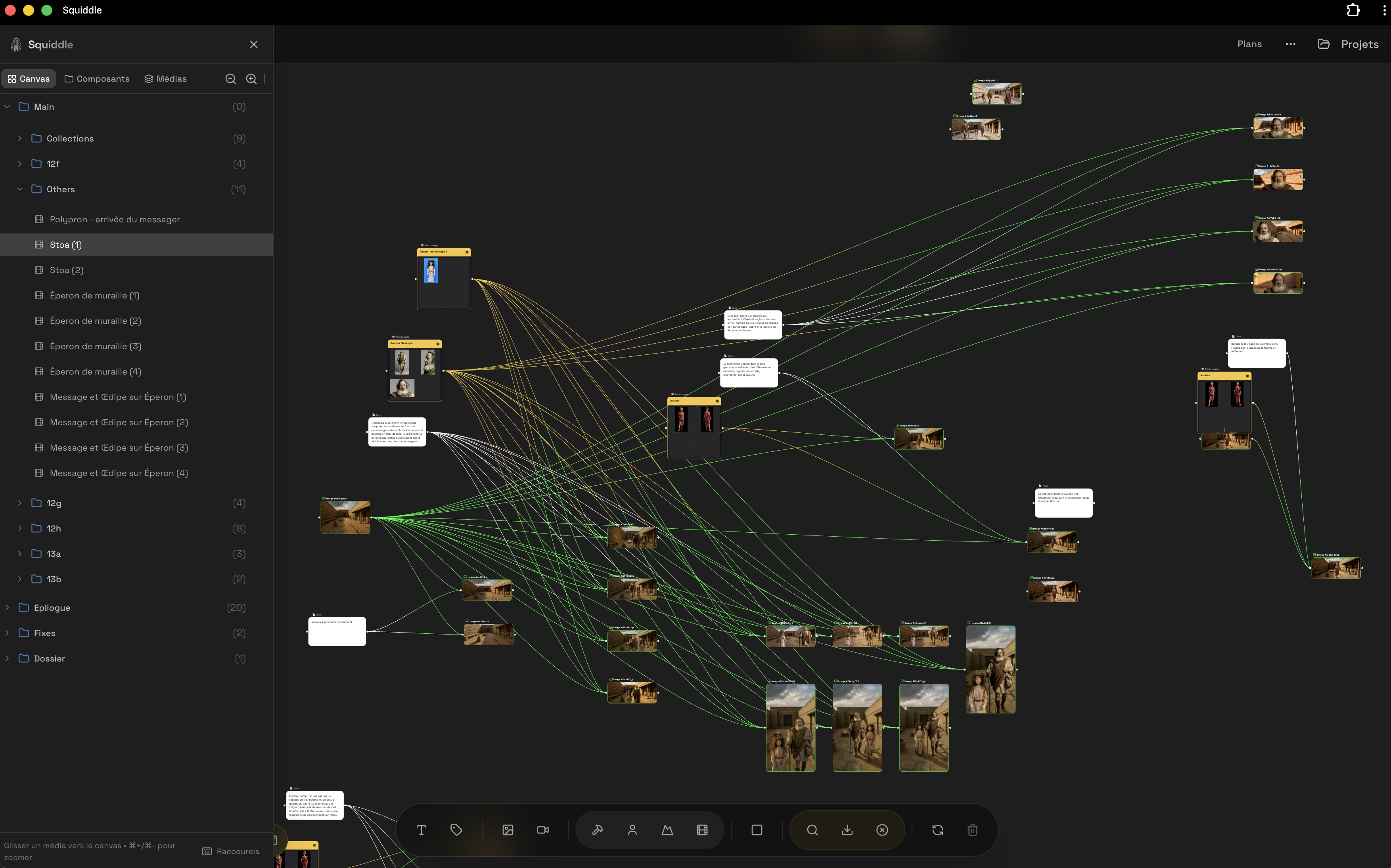
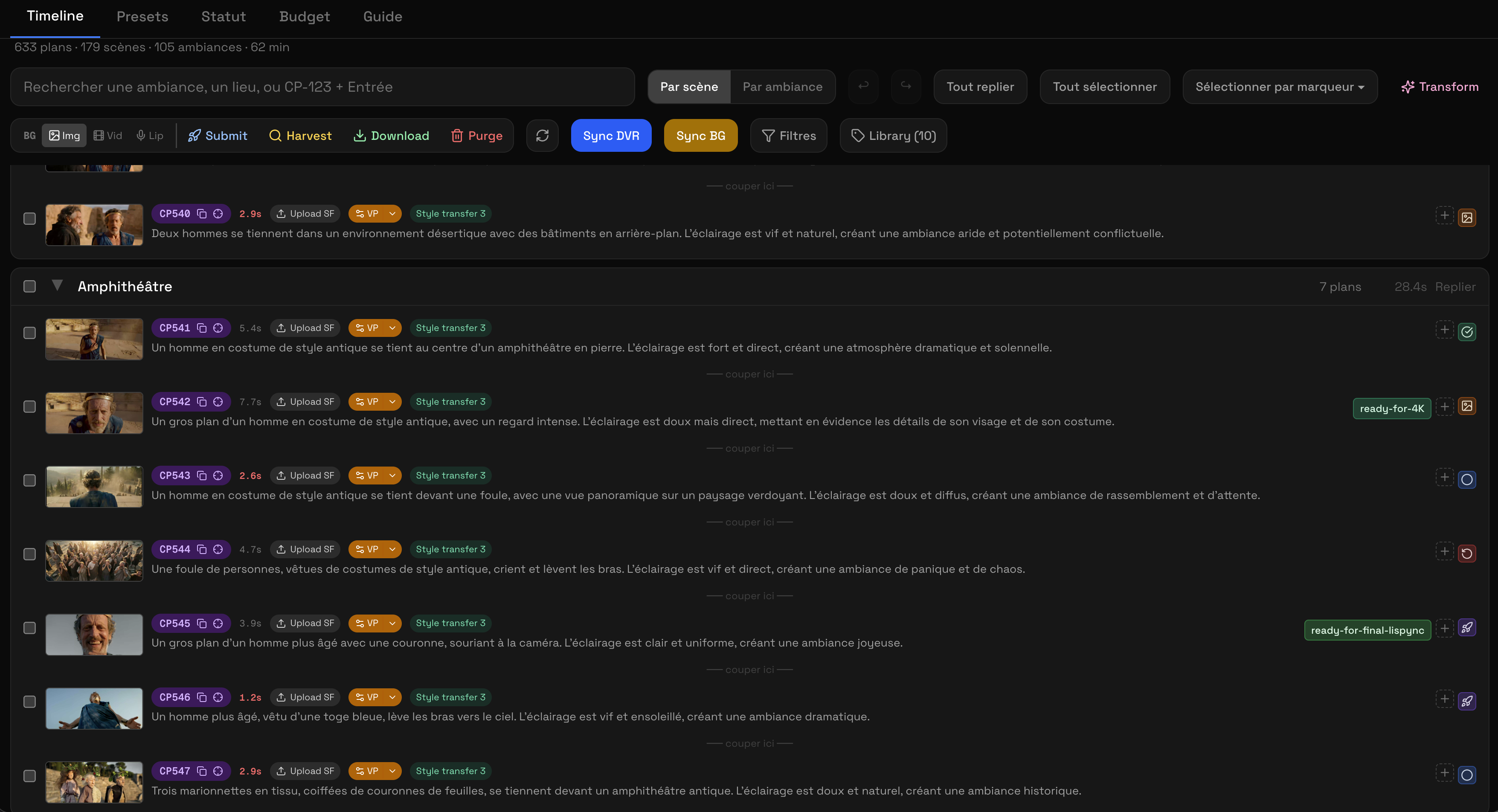
A 65-minute film, created by one person, would not have held without this. The processing chains are long: prompt → image → image edited to fix characters → image turned into a start frame for a video model → video dubbed with a voice → voice lip-synced → SFX. Multiplied by the hundreds of shots in the film. Without code, impossible.
Co-creator, not co-director
The director's central task is staging: shot breakdown, angles, the camera's position and movement. And that is precisely what AI does worst. If I let it propose the shots, it decides in my place — it co-directs. But I have no co-director: I have a co-creator, building each shot with no memory of the others. The director is me.
So I had to code my own tools, with Claude Code, to move the camera and cut my edits the way I want — and, rather than hide the inconsistencies, to make a style of them.
Ideally, there would be a unified tool — a blend of Blender, DaVinci Resolve and image and sound generation gathered in one place. That complete solution does not exist: we only have bricks. Until a universal tool arrives — and that will take a while — better to build your own. That is the whole point of agentic coding.
For the real challenge of a feature film is continuity — of dialogue, of dramaturgy. An ensemble film, where characters cross paths without answering one another, would be simpler; a true dramaturgy demands these tools, and demands building them yourself.
AI time
January 2025 → June 2026. During the making, the models mutated several times. February's technique is not November's. Instead of fighting it, you embrace it: you redo, you regenerate.
AI regenerations are non-destructive. You can create a shot in draft, recreate it clean, reject it, retry — as many times as you want, without ever degrading quality. Classic shooting, by its sheer weight, forbids this — or at least narrows the options. Writing allows it. Making an AI film resembles writing: you spend most of your time rewriting, right up to publication.